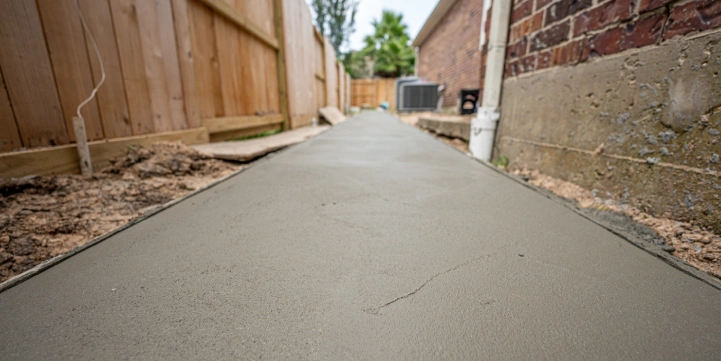
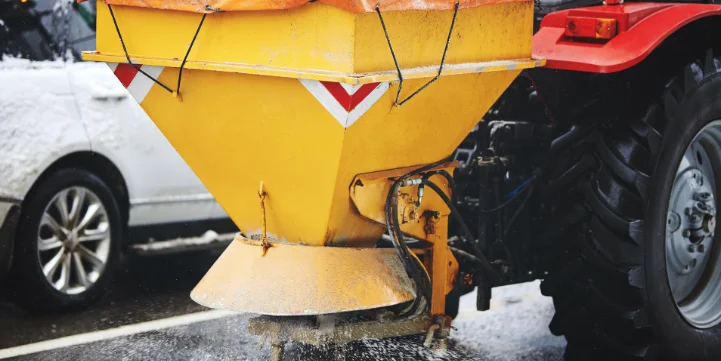
Yes, road salt and many de-icers can damage concrete driveways and patios in Indiana. Salt pulls moisture into concrete, and that moisture expands during freeze-thaw cycles. After repeated winter exposure, the surface can start to flake, pit, scale, or break apart.
If you are asking, “Does road salt damage concrete driveways?” the answer is yes, especially on new, unsealed, stamped, or decorative concrete. The safer plan is to use less salt, choose better traction products, and seal the surface before winter. These steps help reduce salt damage to concrete driveway Indiana homeowners often see after harsh weather.
How Salt Damages Concrete
Concrete has tiny pores that absorb water. When rock salt or de-icer sits on the surface, salty moisture can move into those pores. Once temperatures drop, that moisture freezes, expands, and weakens the top layer.
Common signs of salt damage include:
- Flaking concrete
- Surface pitting
- Scaling
- Rough patches
- White residue
- Worn sealer
- Faded stamped concrete color
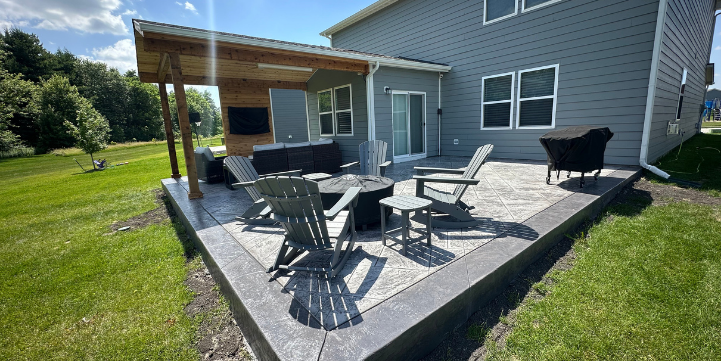
Stamped and decorative concrete can be more vulnerable because the finish depends on color, texture, and sealer protection. Once salt breaks through the sealer, the surface can lose its clean appearance more quickly. That is why safe ice melt for stamped concrete Indiana patios should be chosen carefully.
Products Ranked by Concrete Safety
Not every winter product is safe for concrete. Some products are harsh, some are safer, and some only add traction. Here is a simple ranking homeowners can use.
Avoid These Products
These products can increase winter concrete damage:
- Sodium chloride, or rock salt: Cheap and common, but harsh on concrete.
- Magnesium chloride: Often marketed as safer, but still risky for concrete.
- Calcium chloride: Fast melting, but not ideal for concrete surfaces.
- Ammonium nitrate: Very damaging because it can chemically attack concrete.
- Ammonium sulfate: One of the worst choices for driveways and patios.
Safer Options
These options are better when you need a de-icer safe for concrete in Indiana winters:
- Calcium magnesium acetate, or CMA: A safer chloride-free option.
- Potassium acetate: A lower-risk de-icer, though less common for homeowners.
- Sand: Adds traction without attacking concrete.
- Clean kitty litter: Adds grip, but should be swept up after use.
Best Protection
The best way to protect concrete is to reduce the need for chemical products. Seal the surface before winter, shovel snow early, and use sand for traction when possible. For high-use areas, heated mats or heat cables can also reduce ice buildup.
What to Use Instead of Salt
If you want to know what to use on a concrete driveway in Indiana winters, start with sand. It does not melt ice, but it improves traction without chemically attacking the slab. It works best when snow is removed before it packs down.
For melting, choose CMA when available and use it only where needed. It may cost more than rock salt, but it is better for stamped concrete, decorative patios, newer slabs, and sealed driveways. Avoid spreading any de-icer heavily across the full surface.
A safer winter plan is simple:
- Shovel snow early.
- Use sand for grip.
- Use CMA only where melting is needed.
- Avoid heavy salt use.
- Sweep residue off after thawing.
- Reseal the surface before the next winter.
New Concrete Needs Extra Care
New concrete is more likely to suffer salt damage because it is still curing and gaining strength. Avoid de-icers during the first four weeks after placement. During the first winter, sand is usually the safer choice.
Concrete under one year old should be treated carefully. Do not use rock salt or ammonium-based de-icers on it. If the surface is stamped, colored, or decorative, ask a concrete contractor before applying any ice melt.
Why Sealing Helps Before Winter
A quality sealer helps reduce water absorption. This matters because salt damage starts when salty moisture enters the surface and freezes inside the concrete. When the surface is sealed correctly, that moisture has a harder time getting in.
Fall is usually the best time to seal concrete in Indiana. The surface should be clean and dry before freezing weather begins. Sealing is especially important for concrete driveways, stamped patios, walkways, colored concrete, and outdoor living areas.
What to Do If Salt Damage Has Already Happened
Salt damage usually appears as flaking, pitting, scaling, rough areas, or a sandy surface. On stamped concrete, it may also show up as faded color or worn sealer. If the damage spreads after winter, the surface should be inspected before more repairs are made.
Minor damage may be improved with cleaning, sealing, or surface repair. If the slab is stable, resurfacing or an overlay may help restore the look. If the concrete is cracked, sinking, or breaking apart, replacement may be the better long-term option.
Get the Right Help for Winter Concrete Damage
NGL Concrete And Design helps homeowners with concrete driveways, patios, stamped concrete, decorative concrete, and outdoor living surfaces in Carmel, Lafayette, and nearby Indiana areas. A professional review can help you decide whether your concrete needs sealing, resurfacing, repair, or replacement. That helps prevent concrete damage from salt, which Carmel, IN, homeowners often deal with after repeated freeze-thaw cycles. Contact us today!