

You know that frustrating moment when you’re entertaining guests and everyone’s packed into your kitchen while your beautiful backyard sits empty? I totally get it. My own home had that same awkward divide between indoor and outdoor spaces until we discovered how concrete patios could bridge that gap. Now our home flows naturally from inside to outside, and we actually use every square foot. If you’re ready to make your home feel bigger and more connected without adding square footage, let’s talk about how concrete patios can create that perfect indoor-outdoor flow you’ve been wanting.
Concrete Patios: The Smart Choice for Connected Living
Here’s what makes concrete patios special for indoor-outdoor flow: they’re incredibly versatile. Unlike other patio materials that force you into specific looks or create awkward transitions, concrete adapts to work with your existing home.
Wood decks often sit too high, creating that “stepping down” feeling when you go outside. Natural stone can look beautiful, but it often clashes with interior flooring. Concrete? It can be finished to complement any interior style while maintaining the level transitions that make spaces feel connected.
Plus, concrete gives you design freedom. Want it to look like natural stone? We can stamp it. Prefer a sleek, modern finish? We can polish it smooth. Need it to match your interior colors? We can stain it to coordinate perfectly.
Building Seamless Connections Between Your Indoor and Outdoor Areas
The magic happens in the planning phase. Creating true flow between indoor and outdoor spaces requires thinking about how people actually move through your home. Consider the path from your kitchen to the patio when you’re carrying plates and drinks for dinner outside. Think about how natural it feels when guests walk from your living room through the doors to continue their conversation on the patio.
- Physical connection first: Your patio needs to feel like a natural extension of your indoor flooring. This means managing height differences, choosing complementary materials, and creating smooth transitions that don’t make people feel like they’re leaving your home.
- Visual harmony: Colors and textures should have a conversation, not an argument. If your interior has cool grays and whites, your concrete can echo those tones. Warm wood floors inside pair beautifully with earth-toned concrete stains outside.
- Functional flow: Think about how you’ll actually use the space. Will you be carrying food outside? Moving furniture? The connection needs to work for real life, not just look good in photos.
Of course, all these planning principles mean nothing without the right physical connection between your spaces. The type of doors you choose will largely determine whether your indoor-outdoor flow actually works or falls flat.
Choosing the Right Doors for Indoor-Outdoor Connection
Your door choice dramatically impacts how connected your spaces feel. Here’s what actually works: The right doors don’t just provide access, and they create a visual bridge that makes your outdoor space feel like an extension of your interior rooms. Think of your doors as the gateway that either welcomes people outside or creates a barrier that keeps spaces feeling separate.
- Wide sliding doors: These create the most dramatic effect. Large glass panels provide a constant visual connection, and when they’re open, your indoor and outdoor spaces practically become one room. Perfect for entertaining or just enjoying the view.
- Classic French doors: Double doors add elegance while maintaining that crucial see-through connection. They work especially well with traditional or transitional home styles and can open wide enough for easy movement between spaces.
- Accordion-style bi-fold doors: Want to really wow your guests? Bi-fold doors can open an entire wall, creating one massive indoor-outdoor living area. They’re perfect for larger spaces and make entertaining feel effortless.
- Quality single doors: Sometimes, simpler is better. A well-chosen single patio door with large glass panels can create good flow, especially if your space is more intimate or your budget is tighter.
Coordinating Your Concrete Patio with Your Home’s Interior Design
Your patio should feel like it belongs with your house, not like an afterthought. Here’s how to make that happen: The goal is to create harmony between your interior and exterior spaces so they feel like parts of the same design story. When styles clash or feel disconnected, your patio ends up feeling like a separate structure rather than an integrated part of your home.
- Clean, modern homes: Smooth finishes and simple patterns work best. Think polished concrete or subtle geometric designs. Keep colors neutral and avoid busy patterns that compete with your clean interior lines.
- Classic traditional style: Warmer concrete colors and timeless patterns create the right feel. Stamped concrete that mimics brick or natural stone can beautifully bridge traditional interior elements with outdoor durability.
- Bold contemporary design: This is where you can have fun with concrete. Interesting textures, creative colors, and artistic finishes can complement contemporary interiors perfectly. Consider exposed aggregate or decorative staining techniques.
- Cozy farmhouse feel: Natural, earth-toned concrete with organic textures fits right in. Look for finishes that feel like they’ve been there forever, like weathered stone looks or natural earth colors.
Achieving Perfect Level Alignment
Getting your floors to work together takes planning, but the results are worth the effort: When your indoor and outdoor floor levels align properly, the transition feels effortless and natural. You’ll notice the difference immediately, no more awkward stepping up or down when moving between spaces. Plus, proper level alignment makes your home feel larger and more cohesive, since your eye flows smoothly from interior to exterior without interruption.
- Start with measurements: Before any concrete work begins, measure your interior floor height precisely. Your contractor needs this information to plan the right base depth and finishing thickness.
- Work with building codes: Most areas require outdoor surfaces to sit slightly below indoor floors to prevent water problems. A good contractor will meet these requirements while minimizing the height difference you actually notice.
- Plan for drainage: Your patio needs a proper slope to shed water, but this should be managed away from the house connection. The area right at your threshold should feel as level as possible.
Extending Your Interior Style Outside
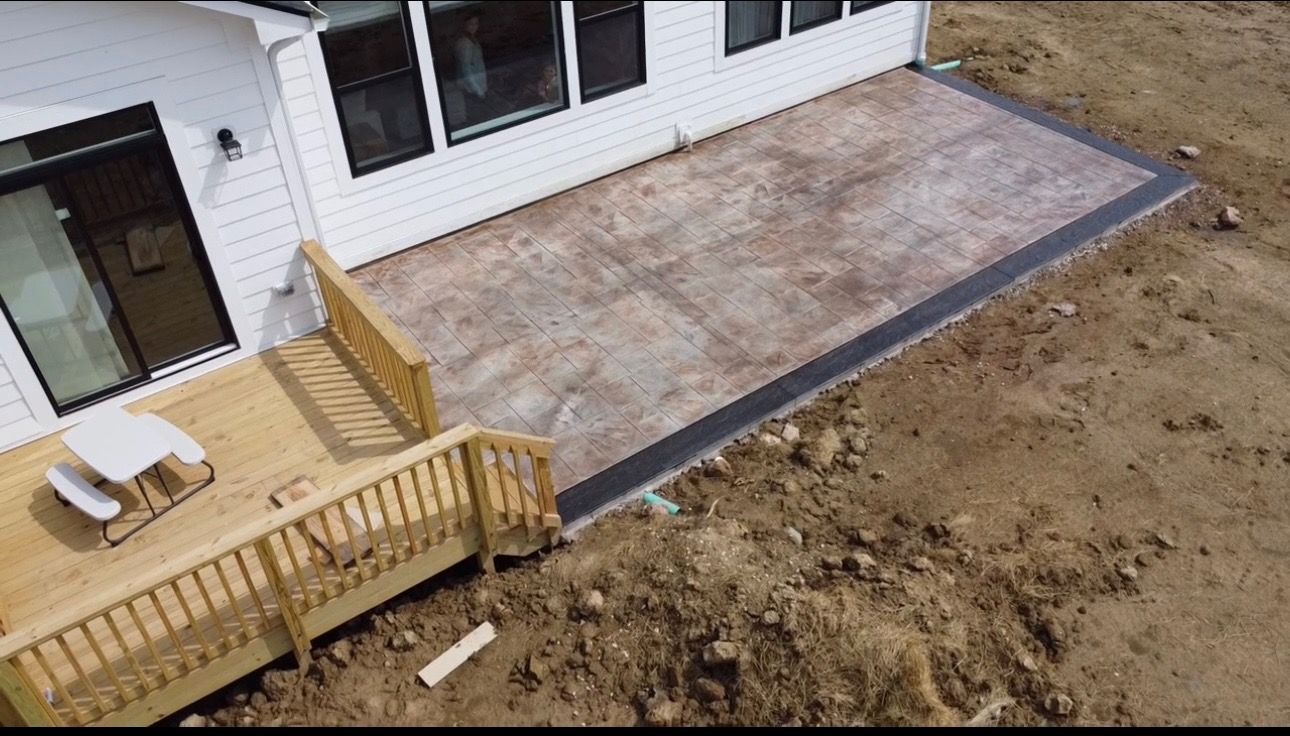
True flow goes beyond just flooring. Think about these elements too: These details work together to create a cohesive environment that feels intentional and well-designed. When you coordinate lighting, furniture, and colors between your indoor and outdoor spaces, guests won’t even realize where your house ends and your patio begins. It’s these finishing touches that transform a simple concrete patio into a true extension of your living space.
- Coordinated lighting: Your outdoor lighting should feel related to your interior fixtures. Modern homes might use sleek linear LEDs, while traditional homes could choose classic lantern styles.
- Furniture relationships: Your outdoor furniture doesn’t need to match your indoor pieces, but they should feel like they belong in the same home. Similar color families or complementary styles work well.
- Color story continuation: Bring your interior colors outside through accessories, planters, and furniture. If your living room has navy accents, consider incorporating navy in your outdoor cushions or planters.
- Architectural echoes: Repeat design elements from your home’s architecture in your patio area. Similar columns, railing styles, or decorative details create visual continuity.
Lighting Design for All-Day Flow
Great lighting extends your indoor-outdoor connection into the evening: Without proper lighting, your beautiful patio becomes useless after sunset, essentially cutting your usable space in half. The right lighting plan creates a warm, inviting atmosphere that draws people outside even after dark. Think of lighting as the bridge that keeps your indoor-outdoor flow working around the clock, not just during daylight hours.
- Overall atmosphere: Soft, general lighting makes your patio feel welcoming after dark. String lights, subtle LED fixtures, or classic lanterns can provide gentle illumination that feels natural.
- Practical task lighting: If you’ll be cooking or dining outside, add focused lighting for these activities. Good task lighting keeps your space functional when the sun goes down.
- Highlighting special features: Use accent lighting to showcase plants, architectural details, or decorative elements. This creates visual depth and interest in your outdoor space.
- Balancing with indoor light: Your outdoor lighting levels should work with your indoor lighting. Avoid creating stark contrasts that make the transition feel jarring.
Real-World Tips for Your Concrete Patio Project
Now that we’ve covered the design principles, let’s talk about the practical side of making your indoor-outdoor flow dreams a reality. These tips will help you avoid common pitfalls and ensure your project goes smoothly from start to finish. Think of this as the insider knowledge that can save you time, money, and frustration during your patio installation.
- Perfect timing: Summer installation gives you ideal weather for concrete curing and immediate enjoyment of your new space. You’ll have months to use and love your patio before winter arrives.
- Professional results: Creating a perfect indoor-outdoor flow requires expertise in levels, drainage, and finishes. Professional installation ensures everything works together properly from day one.
- Simple maintenance: Concrete patios need minimal upkeep. It just requires occasional cleaning and periodic sealing. Plan for annual maintenance to keep everything looking fresh.
- Future adaptability: A well-designed concrete patio can evolve with your needs. You can change furniture, add features, or modify the space as your lifestyle changes.
These practical considerations might seem like small details, but they’re what separates a good patio from a great one that truly transforms how you live in your home.
Ready to Transform Your Home?
Creating seamless indoor-outdoor flow with concrete patios changes how you experience your home. Your space feels bigger, more connected, and infinitely more useful for both daily life and entertaining. Summer is the ideal time to start this transformation, because you’ll enjoy your new connected living space all season long, and your home will be perfectly set up for years of indoor-outdoor enjoyment.
Ready to create the flowing, connected home you’ve been picturing? NGL Concrete and Design brings years of experience in designing concrete patios that seamlessly connect indoor and outdoor spaces. Get started today by calling (765) 412-4814 or emailing [email protected]. Let’s work together to create a concrete patio that makes your home feel bigger, more connected, and perfectly suited to how you actually want to live. Your indoor-outdoor flow transformation starts here.

