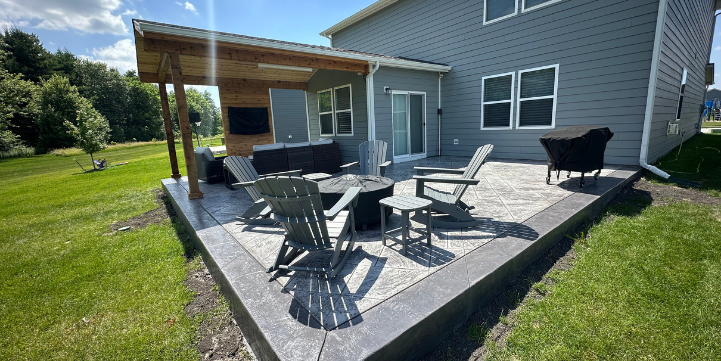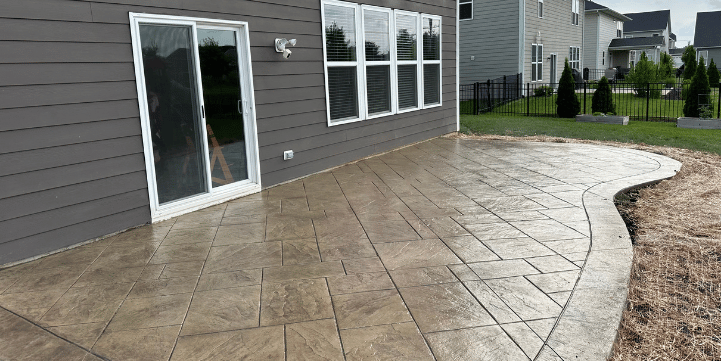
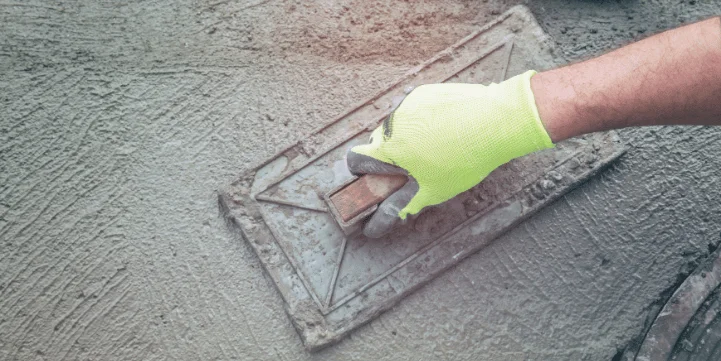
Concrete repair vs replacement in Carmel, IN, depends on the type of damage, the cause, and how far the problem has spread. In most cases, concrete with surface-level cracks under 1/4 inch wide can be repaired or resurfaced. Concrete with structural cracks wider than 1/4 inch, major settling, heaving, widespread spalling, or drainage failure usually needs replacement.
In Indiana, freeze-thaw weather makes this decision more important. Water enters small cracks, freezes, expands, and pushes the concrete apart. That is why a small patch may not last if the slab has deeper movement or drainage problems.
Should I Repair or Replace Concrete Patio Surfaces in Indiana?
You can usually repair a concrete patio when the slab is level, the cracks are narrow, and the base underneath is stable. Hairline cracks, mild discoloration, shallow wear, and light surface damage can often be fixed with sealant, resurfacing, or a decorative overlay.
You should replace a concrete patio when the slab has deep cracks, uneven sections, water pooling, heaving, or a weak base. A patch may hide the damage for a short time, but it will not fix soil movement, poor drainage, or structural separation.
Cracked Concrete Repair or Replace: What the Crack Size Means
Hairline cracks under 1/4 inch wide are usually repairable when the slab is stable. The best option is often crack sealant, proper cleaning, and resealing to prevent water from continually entering the concrete.
Cracks wider than 1/4 inch need a closer look, as they may indicate movement beneath the slab. If one side sits higher, the crack keeps spreading, or water collects inside it, replacement may be the stronger long-term choice.
Watch for these signs:
- The crack keeps reopening
- One side of the slab is higher
- Water sits in or around the crack
- The concrete feels loose or uneven
When Spalling, Settling, or Heaving Means Replacement
Spalling happens when the concrete surface flakes, chips, or peels away. If the base is still solid, concrete resurfacing vs replacement in Indiana may come down to surface condition and design goals. If the slab is weak, hollow, or breaking apart across large areas, replacement is usually better.
Settled or heaving slabs also need more than a basic patch. Minor settlement may be corrected with slab lifting, but severe sinking, raised edges, broken corners, or repeated movement usually mean the concrete should be replaced.
Drainage Failure Is a Major Replacement Sign
Drainage failure is one of the clearest signs that concrete needs replacing. If water pools on the slab, runs toward the foundation, or collects near a patio, driveway, or walkway edge, the concrete may have the wrong slope.
A surface patch cannot fix bad grading. In many cases, the slab needs to be removed, the base corrected, and the new concrete poured with proper pitch so that water moves away from the home.
Drainage problems can include:
- Water pooling after rain
- Water running toward the house
- Ice forming in low spots
- Soil washing out near the slab
Concrete Overlay or New Concrete in Indiana?
A concrete overlay can be a good option when the slab is stable, but the surface looks worn. Microtopping, resurfacing, and decorative overlays can improve color, texture, and appearance without a full tear-out.
However, overlays cannot fix structural cracks, unstable slabs, bad drainage, heaving, sinking, or weak base material. If the concrete underneath is moving, the new surface will usually crack too.
A good overlay candidate has:
- A stable slab
- Minor surface damage
- Proper drainage
- No major movement
- No widespread crumbling
How Indiana’s Freeze-Thaw Cycle Speeds Up Concrete Damage
Indiana’s weather is hard on concrete because temperatures often move above and below freezing during the colder months. Water enters small cracks, freezes, expands, and forces the crack to open wider.
A small crack that might stay cosmetic in a warmer climate can become a larger problem in Indiana within 2 to 3 seasons if left untreated. Sealing cracks early, improving drainage, and resealing the surface can help slow that damage.
When to Replace Concrete Driveway Surfaces in Indiana
You should replace a concrete driveway when the damage affects safety, drainage, or the slab’s structure. Driveways carry more weight than patios and walkways, so cracks, dips, and weak sections tend to worsen with daily vehicle use.
Replacement is usually the right choice when the driveway has large cracks, sinking panels, heaving sections, major spalling, or water running toward the garage or foundation. A patch may look fine at first, but it often fails when the underlying cause remains active.
How Long Can You Patch Concrete Before Replacing?
A concrete patch may last for months or years, depending on the extent of the damage, weather conditions, and repair quality. Small sealed cracks on stable concrete can hold up well, while patches on moving slabs usually fail much faster.
If the same crack keeps reopening, the patch keeps breaking loose, or water keeps collecting in the same area, the problem is deeper than the surface. Repair once if the damage is minor and stable, but replace if the same problem keeps recurring or the slab no longer drains, supports weight, or sits level.
What a Professional Concrete Assessment Includes
A professional assessment looks beyond the visible crack. NGL Concrete And Design evaluates crack size, slab movement, drainage, slope, surface wear, base stability, surrounding grade, and how the concrete connects to the home or outdoor space.
The goal is to determine whether the slab can be repaired, resurfaced, overlaid, lifted, or fully replaced. This helps homeowners avoid paying for a short-term patch when a new concrete surface would perform better.
Repair Minor Damage, Replace Structural Failure
Concrete repair works best for narrow cracks, stable slabs, cosmetic wear, and surface-level damage. Concrete replacement is the better choice when the slab has major cracks, sinking, heaving, drainage failure, or widespread breakdown.
For Indiana homeowners, waiting too long can make a repairable issue more expensive because freeze-thaw weather pushes water deeper into cracks. If you are not sure whether to repair, resurface, overlay, or replace your concrete, contact us today for an inspection and a clear recommendation.