
Durable Concrete Paths Designed for Carmel Properties
A concrete walkway in Carmel, IN, should provide a stable route between the areas you use most while complementing the appearance of your home. NGL Concrete and Design installs front walkways, private sidewalks, side-yard paths, and other concrete connections for residential and commercial properties.
Whether you need a new concrete sidewalk in Carmel, IN, or want to replace an uneven front path, we can plan the layout, prepare the site, and complete the pour with close attention to drainage and long-term performance. Every project is shaped around the property rather than treated as a standard strip of concrete.
Concrete works well for paths connecting:
- Driveways and front entrances
- Patios and outdoor living areas
- Side gates and backyards
- Garages and accessory buildings
- Parking areas and commercial entrances
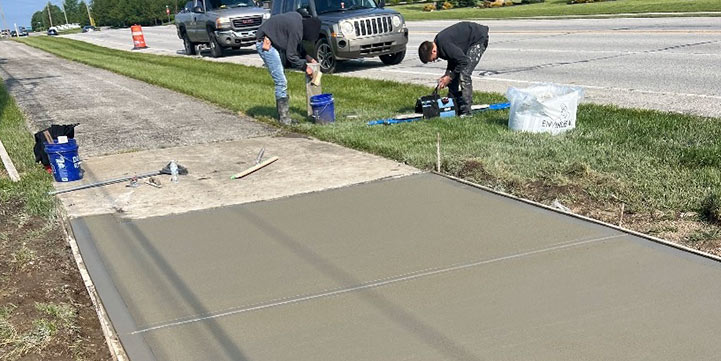
Walkway Finishes: Broom Finish, Stamped and Exposed Aggregate
The right finish affects more than appearance. Texture influences traction, winter maintenance, installation cost, and how naturally the path fits with the home. For most everyday sidewalks and front paths, we recommend broom finish concrete. Stamped concrete and exposed aggregate are strong alternatives when decorative character is a larger priority.
Broom (Brush) Finish Walkways
A broom finish concrete walkway is our recommended option for dependable traction and straightforward maintenance. After the concrete surface is leveled, a broom is drawn across it to create fine grooves that help shoes grip the surface.
This finish is especially practical in Carmel, where rain, frost, snow, and refreezing moisture can make smooth outdoor surfaces slippery. It also works with a wide range of home styles without drawing attention away from the surrounding architecture.
Broom finish is a strong choice when you want:
- Reliable traction in wet conditions
- A clean and consistent appearance
- Easier snow and debris removal
- A lower cost than decorative finishes
- A practical surface for frequent foot traffic
Stamped Concrete Walkways
A stamped concrete walkway adds patterns and color that can resemble stone, slate, brick, or individual pavers. It is often selected for a prominent front walkway where the path contributes to the home’s overall curb appeal.
Stamped concrete offers more design flexibility than a standard broom finish, but it generally costs more because of the additional coloring, stamping, detailing, and sealing involved. The pattern and sealer should also be chosen with traction in mind. Highly textured patterns may collect snow, while an overly glossy sealer can become slippery when wet.
This finish works best when homeowners want the visual character of masonry with the continuity of a poured concrete surface.
Exposed Aggregate Walkways
Exposed aggregate reveals the small stones within the concrete, creating a textured surface with natural color variation. It pairs especially well with stone accents, traditional homes, and landscapes that benefit from a less uniform appearance.
Its texture can provide useful grip, although the surface is rougher underfoot than broom-finished concrete. Careful installation is important because the aggregate must be exposed evenly without removing too much of the surrounding cement paste.
Exposed aggregate usually costs more than broom finish but can deliver a distinctive appearance without using a stamped pattern.
How Much Does a Concrete Walkway Cost in Carmel, IN?
Concrete walkway cost depends on the path’s size, finish, accessibility, site preparation, demolition requirements, reinforcement, curves, steps, and drainage conditions. Small projects may also be affected by minimum mobilization and concrete delivery costs.
The following ranges can be used for early planning, but they are not a substitute for an on-site estimate:
Walkway Finish | General Planning Range |
Broom finish concrete | $10–$16 per square foot |
Exposed aggregate | $14–$22 per square foot |
Stamped concrete | $16–$26 per square foot |
A 4-by-30-foot walkway may cost approximately $1,200 to $3,120, depending on the finish. Removal, grading, limited access, curves, steps, and custom details can increase the price. We evaluate each site and provide a clear proposal based on the project’s actual requirements.
Repair, Level, or Replace Your Concrete Walkway?
Not every damaged walkway needs complete replacement. The right solution depends on the condition of the concrete and whether the problem is limited to the surface or caused by movement beneath the slab.
When Repair or Leveling May Work
Leveling may be appropriate when one or more intact sections have settled but remain structurally sound. Lifting the affected concrete can reduce trip hazards and improve drainage without removing the entire walkway. Small, stable cracks may also be sealed to limit water intrusion. However, repaired cracks will usually remain visible.
When Replacement Is the Better Option
Concrete walkway replacement is typically more reliable when the existing path has:
- Several wide or expanding cracks
- Broken or crumbling sections
- Severe scaling or surface deterioration
- Repeated settlement after previous repairs
- An incorrect slope that directs water toward the home
- Tree-root damage or major base failure
- Multiple uneven sections that create trip hazards
Replacement may also make sense when the walkway is too narrow, follows an inconvenient route, or no longer fits changes planned for the entrance or surrounding property. Before installing the new concrete, we can review the base, drainage, slope, and layout to address the underlying issue.
When Partial Replacement Is Possible
If the damage is limited to one panel, partial replacement may be an option. New concrete will not perfectly match sections that have weathered over time, so we explain the expected difference before recommending this approach.
A Careful Approach to Walkway Installation in Carmel, IN
A durable concrete walkway begins with proper preparation below the finished surface. We evaluate the route, soil conditions, drainage, nearby structures, and expected foot traffic before installation. These details help us determine the appropriate width, thickness, slope, and base requirements.
Most residential walkways are 3 to 4 feet wide and use approximately 4 inches of concrete over a compacted base. We establish a controlled slope to direct water away from the home and add control joints to manage natural shrinkage. Removing loose soil and preparing a stable foundation also helps prevent settlement and uneven sections.
Our Installation Process
- Initial Consultation: We discuss how the path will be used, review finish options, and assess the proposed location, access, elevation, and drainage.
- Design Approval: You review the planned dimensions, route, finish, and project details before installation begins.
- Site Preparation: We remove existing material when necessary, excavate to the required depth, and prepare a stable, compacted base.
- Forming and Pouring: Forms establish the walkway’s shape, width, elevation, and slope. We then place and level the concrete.
- Finishing and Curing: The selected broom, stamped, or exposed aggregate finish is completed before the concrete begins its controlled curing period. Sealer is applied when appropriate for the chosen system.
- Final Walkthrough: We review the completed walkway with you and provide guidance on curing, initial use, maintenance, and winter care.
Protecting Your Concrete Walkway Through Carmel Winters

Carmel’s freeze-thaw cycles make proper finishing, drainage, sealing, and winter maintenance essential. Taking the right precautions helps protect the walkway from surface damage while keeping it safer throughout the colder months.
Slip Resistance, Salt, and Sealing
Broom finish is our recommended option for everyday walkways because its fine texture provides dependable traction in wet conditions. Exposed aggregate can also offer useful grip, while stamped concrete should have an appropriate texture and a sealer that does not leave the surface overly glossy.
Remove snow before it becomes compacted and refreezes, preferably using a plastic-edged shovel that is less likely to scrape the concrete. Avoid heavy use of deicing salts, especially during the walkway’s first winter, and use sand when temporary traction is needed. A compatible penetrating sealer can also help limit moisture and salt absorption.
Walkways Near the Street
A walkway installed entirely on private property has different requirements from a sidewalk or path that enters Carmel’s public right-of-way. Before work begins, the proposed route should be checked against property lines, utility locations, easements, and nearby public areas.
Construction or excavation within a dedicated right-of-way or easement may require a City of Carmel permit. Projects that close or restrict a public sidewalk may also need additional approval. Requirements vary by location and scope, so the appropriate city department should be consulted before installation begins.
Start Your Concrete Walkway Project in Carmel, IN
Create a safer and more attractive path with a concrete walkway designed for your property and Carmel’s seasonal conditions. We install broom-finished, stamped, and exposed aggregate walkways for entrances, side yards, patios, and other outdoor areas. Every project includes careful site preparation, proper drainage, and a finish suited to your needs. Contact us today to request a free concrete walkway estimate.